Eligibility & Enrollment
Eligibility
You are eligible to enroll in our benefits if you are a regular or seasonal teammate working 30 hours or more per week.
If you’re eligible for benefits, you can enroll the following family members:
Your spouse or qualifying domestic partner (DP)
Your children and/or your spouse or DP’s children under the age of 26*
*Exceptions are made for qualifying children older than the age of 26 who are solely dependent on you for support due to a mental or physical disability
Enrollment
You can enroll or change your benefits:
Within 30 days for your hire date or transfer date
Within 30 days of a qualifying life event
During Open Enrollment each fall
A Qualifying Life Event is a change in your situation that can make you eligible for a special insurance enrollment period, allowing you to add, change, or cancel insurance outside of Open Enrollment.
New Hire
Loss or Gain of Other Coverage
Marriage or Divorce
Change in Domestic Partner Relationship
Birth or Adoption of a Child
Relocation
Conversion from Part-Time to Full-Time

Medical Insurance Basics
Your premium is the amount deducted from your paycheck each pay period to maintain your health insurance coverage. Think of it as your membership fee for being enrolled in the plan.
01: You pay a premium
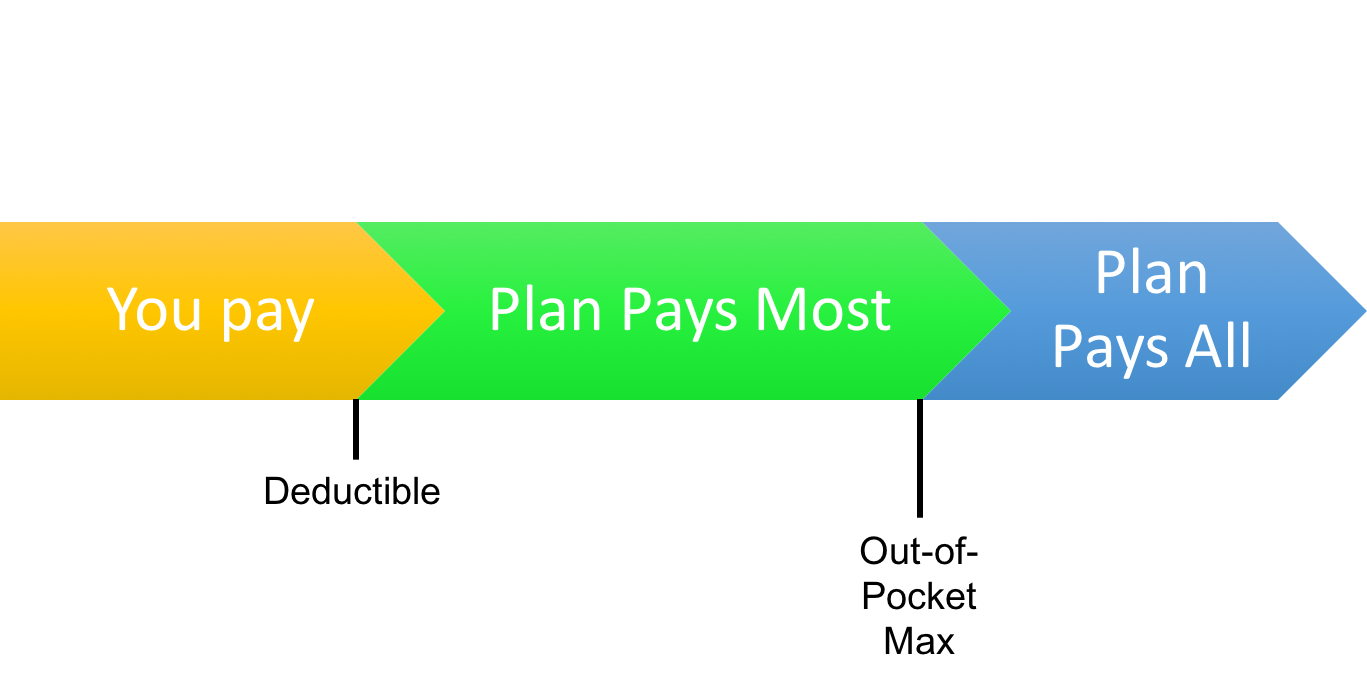
When you receive medical care, you'll generally pay a portion or all of the cost until you reach your plan's deductible. The deductible is the amount you must pay for covered healthcare services before your insurance begins sharing in the cost.
Many preventive healthcare services are covered before you meet your deductible, meaning there is no cost to you when using these services. Depending on your plan, this may include preventive exams, immunizations, well-woman visits, and certain screenings.
02: You pay toward your deductible
After you've met your deductible, your health plan begins paying a larger portion of your covered medical expenses. You may still be responsible for copays or coinsurance, depending on the service and plan you choose.
03: You and your plan share costs
04: You reach your out-of-pocket maximum
If you have significant medical expenses during the year, you may reach your plan's out-of-pocket maximum. This is the most you'll pay out of your own pocket for covered services during the plan year. Once you reach that limit, your health plan will generally pay 100% of covered in-network services for the remainder of the year.
General Medical Insurance FAQs
-
A group of doctors and hospitals that work within your insurance carrier umbrella. Doctors in your network will cost less money than doctors outside of your network, so you want to use these as much as possible.
-
A Health Maintenance Organization (HMO) gives you access to certain doctors and hospitals within a network. Medical care under a HMO plan is only covered if you see a provider within that HMO's network. Premiums are generally lower for HMO plans and there is usually no (or very low) deductible. This plan is a good option for teammates who plan on staying solely within their healthcare network. In short, they are more affordable, but come with more restrictions on which doctors you are allowed to see.
A Preferred Provider Organization (PPO) still feature a network of providers, however they this plan is more flexible on covering you if you need to see a doctor outside of that network. PPO's are generally more expensive, but they offer more flexibility in doctors. This plan is a good option for teammates if you know that you might need to occasionally visit a doctor outside of the medical network. In short, they are more pricey, but come with fewer restrictions on which doctors you are allowed to see.
-
A fixed amount that you pay when using covered health care services.
-
Different medicines are covered at different levels or different "tiers." For specific tier level pricing, please refer to your specific insurance plan.
Brand-name: A drug that is discovered, developed and marketed by a pharmaceutical company.
Generic: Copies of brand-name drugs that have exactly the same dosage, intended use, effects, risks, safety, etc. as the original drug.
Formulary: Prescription drugs that the insurance carrier trusts and includes in insurance plans. These drugs have been tested and researched to be safe and effective.
Non-formulary: Prescription drugs that are not covered by insurance policies. These drugs are more costly.
-
In most circumstances, if you are enrolled in more than one medical plan, the primary plan would be your workforce plan and the secondary plan would be your other plan. There are exceptions to this rule for certain Medicare plans. You must make your claim with your “primary” plan first. The other plan will then contribute to the remaining balance, but it won’t pay anything toward the primary plan’s deductible. If both plans have deductibles, you will have to pay both before coverage kicks in.
Secondary plans will only pay the remaining balance up to, but no more than, the plan's allowed amount or billed amount. If you are on the Anthem plan and have dual coverage, we encourage you to share this information with Collective Health upon enrollment.
Please note:
Members can be dual-covered on more plans than just their parent's or spouse's (i.e. Medicaid/CHIP, Individual, School Plans, Medicare, etc.)
There are certain instances when the workforce plan would not be primary (i.e. if a member is enrolled in Medicare due to an end stage renal disease diagnosis and the date of onset is not within 30 months of the service date)
Secondary plans don't technically always pick up the tab for anything not covered (i.e. if a member receives out-of-network care in which the billed amount exceeds the plan's allowed amount, the secondary plan generally would not cover anything over the allowed amount.)